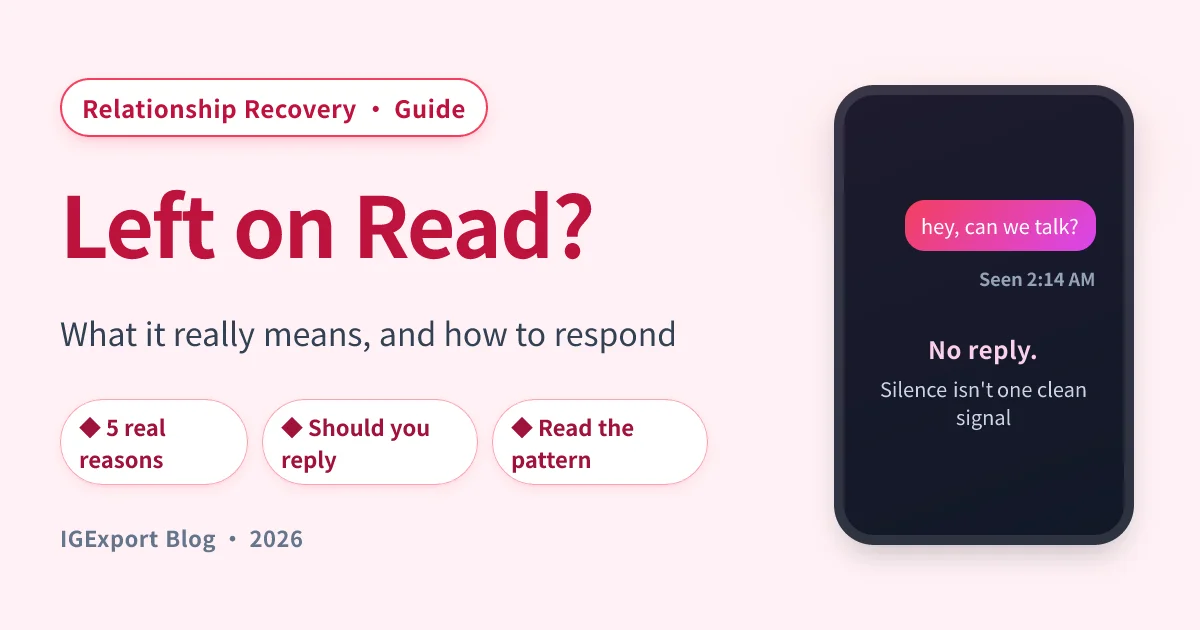
Few things spin your mind faster than being left on read. The little "Seen" sits there, the reply never comes, and within minutes you've written and deleted three follow-ups and imagined the worst.
The problem is that being left on read feels like one clear message — they don't care — when it's actually one of several very different things. This guide breaks down what left on read really means, why people do it, and how to respond without pushing them further away.
What does "left on read" mean?
Left on read means someone opened and read your message — the "Seen" or read receipt confirms it — but didn't reply. The phrase comes from messaging apps like Instagram, iMessage, and WhatsApp that show when a message has been read.
The literal meaning is simple. The emotional meaning is where people get stuck, because "read but no reply" doesn't come with a reason attached. You can see that they read it; you can't see why they went quiet — and that gap is exactly where the anxiety rushes in.
Why people leave you on read
Being left on read can mean several different things, and they're not equally bad:
- They're overwhelmed or busy. They read it, meant to reply properly later, and it slipped.
- They don't know what to say. The message asked something heavy, and silence is them stalling, not rejecting.
- They're processing a conflict. After a fight, going quiet is sometimes them cooling down rather than cutting off.
- They're pulling back. Sometimes it genuinely is a soft signal that interest is fading.
- The conversation just reached a natural end. Not every message needs a reply, and "ok sounds good" doesn't always get one.
The mistake is treating all five as the same thing — the worst one — and reacting as if you already know which it is.
What being left on read does NOT always mean
One "Seen" with no reply is not proof of anything. People read a message at a red light, at work, or half-asleep, fully intending to answer, and then don't. A single instance of being left on read tells you almost nothing on its own.
What tells you something is the pattern. Being left on read once is noise. Being left on read consistently, while their replies to everyone else stay quick and their stories keep updating, is a signal. Read the trend across days, not the single "Seen."
Should you double text?
The instinct after being left on read is to send a follow-up to break the silence. Usually, that makes it worse.
If your last message already asked a question or carried weight, stacking another one on top reads as pressure, not clarity — and pressure is the one thing that reliably pushes a hesitant person further away. A light, low-stakes double text days later can be fine; an anxious "?" or "did I do something?" an hour later rarely is. When in doubt, give the "read" room and let their other behavior tell you where things stand.
How to respond when you're left on read
The move that works is almost always the opposite of the panic move:
- Don't chase the silence. Resist the immediate follow-up. Nothing you add in the first hour improves your position.
- Watch the wider behavior. Are they warm elsewhere — stories, mutual friends, small replies — or going cold everywhere? That context decodes the silence better than the silence itself.
- Match their energy, not your anxiety. When they do reply, don't dump the backlog of everything you were worried about. Meet them where the conversation actually is.
Read the signals instead of guessing
The reason being left on read hurts so much is that you're decoding it from the inside, where one silence gets replayed a hundred times and every reading tilts toward the worst case. You're too close to see it clearly.
The real signals are in the whole conversation, not the last "Seen" — where the temperature actually shifted, what they cared about but never said, whether things were cooling before this message or not. Signal rereads your full IG conversation and gives you an honest read on where you stand, your real odds, and what to do next — every conclusion backed by an actual line from your chat, not a panicked guess.
For the bigger picture on timing and getting a cooling relationship back, read the full guide on how to get your ex back.
Frequently Asked Questions
What does being left on read actually mean?
It means someone read your message (the "Seen" or read receipt confirms it) but didn't reply. The literal meaning is clear; the reason isn't. It can mean they're busy, unsure what to say, processing a fight, pulling back, or that the conversation simply ended — and a single instance rarely tells you which.
Does being left on read mean they're not interested?
Not on its own. One "Seen" with no reply is noise — people read messages at bad moments and forget to answer. What signals fading interest is the pattern: being left on read consistently while they stay quick and active elsewhere.
Should I double text if I'm left on read?
Usually not right away. If your last message carried weight, stacking another on top reads as pressure and can push a hesitant person further away. A light, low-stakes message days later can be fine; an anxious follow-up an hour later rarely is.
How long should I wait after being left on read?
Long enough to read their wider behavior rather than the single silence. Instead of counting hours, watch whether they're warm elsewhere or going cold everywhere over the next couple of days, and respond to that trend.